The World At War Episode 17 HD - Morning (June – August 1944) - video Dailymotion--via Betsy. Excellent.
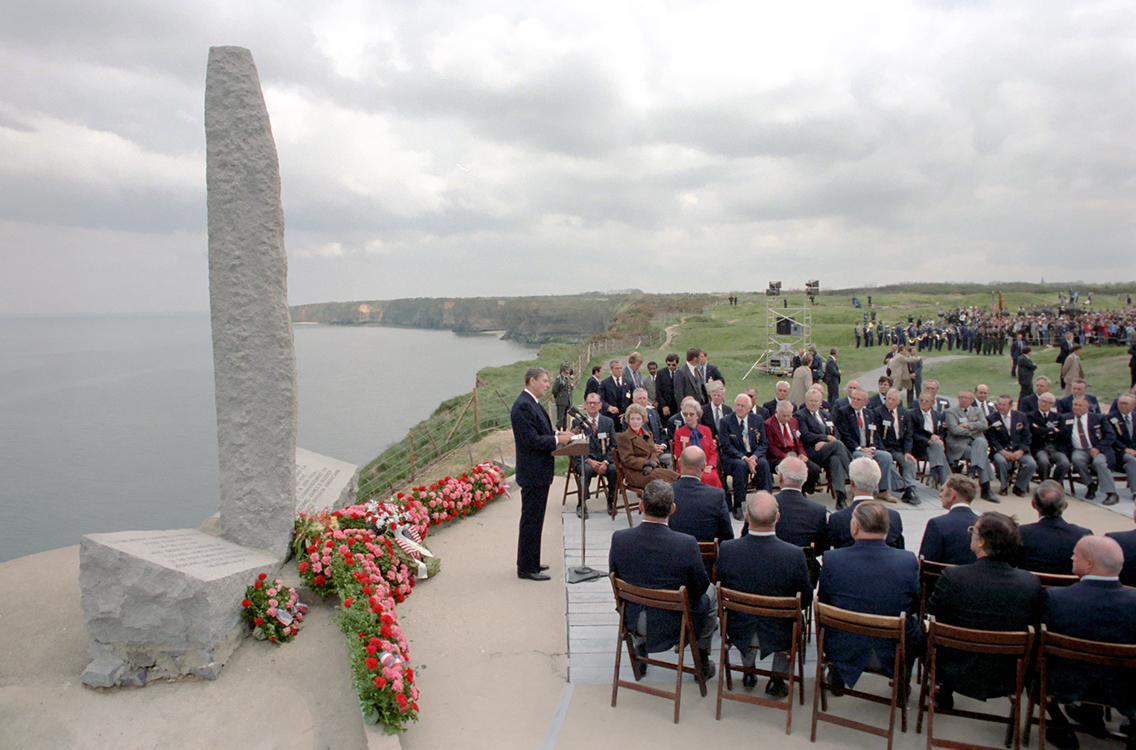
“…You all knew that some things are worth dying for. One’s country is worth dying for, and democracy is worth dying for, because it’s the most deeply honorable form of government ever devised by man. All of you loved liberty. All of you were willing to fight tyranny, and you knew the people of your countries were behind you.
The Americans who fought here that morning knew word of the invasion was spreading through the darkness back home. They fought — or felt in their hearts, though they couldn’t know in fact, that in Georgia they were filling the churches at 4:00 am. In Kansas they were kneeling on their porches and praying. And in Philadelphia they were ringing the Liberty Bell.
Something else helped the men of D-day; their rock-hard belief that Providence would have a great hand in the events that would unfold here; that God was an ally in this great cause. And so, the night before the invasion, when Colonel Wolverton asked his parachute troops to kneel with him in prayer, he told them: “Do not bow your heads, but look up so you can see God and ask His blessing in what we’re about to do.” Also, that night, General Matthew Ridgway on his cot, listening in the darkness for the promise God made to Joshua: “I will not fail thee nor forsake thee.”
These are the things that impelled them; these are the things that shaped the unity of the Allies.”
--American Rhetoric: Ronald Reagan -- 40th Anniversary of D-Day Address
D-Day: On This Day in 1944... | The Patriot Post

Mark Alexander: Profiles of Valor:
The Last D-Day Vets Standing | The Patriot Post
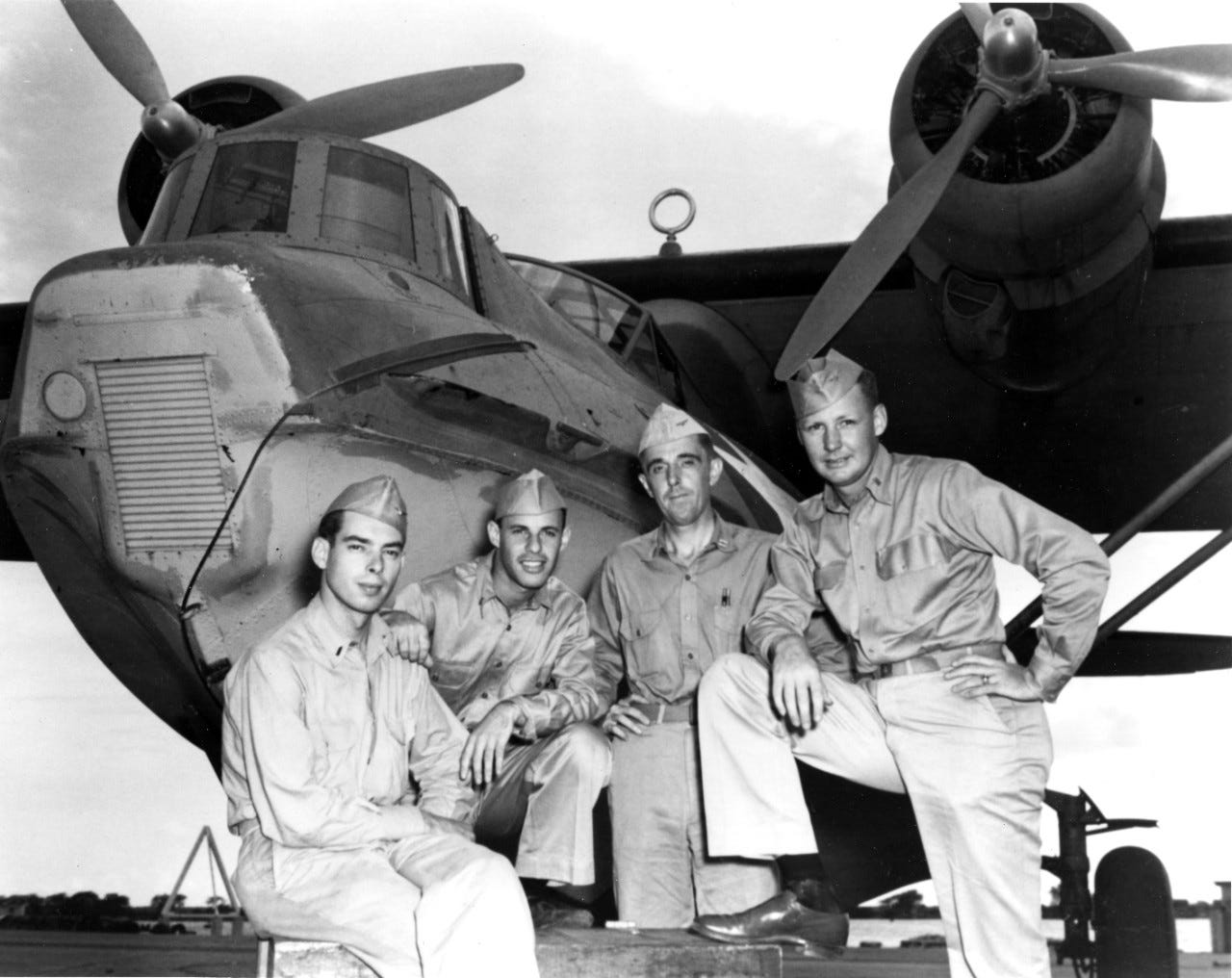
The Overlooked Sacrifice At Midway - Armed Forces Press
The Hour Was Now: Eisenhower, the Supreme Gamble, and the Note in His Pocket - American Thinker
D-Day 2025: A Meditation and Remembrance › American Greatness
81st Anniversary of D-Day - June 6, 1944 - The Last Refuge
D-Day from an eyewitness - American Thinker:
"...Utah Beach: We could see and hear explosions and the constant rattle of small arms fire ahead. I feared for [Paul] Mobley and our other men with the first wave. Then it came our turn — the signal for our boat to make the run to the beachhead. The young skipper revved the engines and we charged through the surf, toward the beach, with incoming shells exploding nearby. Suddenly the worst happened. The boat ran up on a hidden sand bar and stuck. No amount of revving would free us, and we were still several hundred yards from the beach. Impatient and fearful of being a target of the German artillery, the skipper tried to drive forward, hanging us up all the more. Then, apparently in a panic, he simply dropped the ramp and ordered us off. What to do? Nothing but try to make it to shore. I was in the lead vehicle, a small weasel, a tracked amphibious-type jeep. There was the driver and me, with radio, plus duffels and rifles. We were to be first off, to be followed by the two M-7 tanks. With the engines of the tanks already revving up behind, we in the weasel drove off the ramp, hopeful that we could stay afloat and make progress enough to touch ground. But it didn’t happen. Within seconds water flowed over the sides, swamping us.
Our little vehicle settled below the surface, directly in the path of the tanks (I recall thinking I’d like a talk with whoever designed the “amphibious” jeep). Fortunately, the driver and I were wearing life preservers and we bobbed on the surface. But now we faced another challenge. The two tanks could not be delayed in leaving the boat and reaching the beachhead. I was horrified to see the lead tank move forward and start down the ramp — directly toward me. To my relief, one of the gunners aboard the tank spotted the driver and me, threw ropes, and managed to pull us up to where we could hold to the side. It was in that position that I arrived on Utah Beach. With landing craft relieved of the weight of the tanks, the skipper revved the boat onto the beach, dropped ramp and deposited the rest of our crew.
By now, at H-hour plus one, the Germans, recovering from their initial surprise, had zeroed their artillery on the landing area and were pounding the beaches. Soaking wet from my enforced bath I shook almost uncontrollably from the chill — and sheer fright, the realization that someone was trying to kill me. My personal effects — extra clothing, rations, cigarettes, etc. — plus my all-important rifle — had gone down with the weasel. I picked up a rifle and steel helmet from near the body of a dead GI, and acquired a jacket from a discarded duffel. As I started across the beach, a murderous barrage hit the area. I dove into a large shell hole, to find that I had landed squarely on another occupant. There was a yelp, grunt and curse. With something like an apology, I disengaged from my new mate, and was startled to see that he wore the silver leaves of a Lt. Colonel. I think I mumbled more apologies (“sir!”). In any case, he made room for me, and, seeing my soaking wet, shaky condition, offered me a cigarette, which I took — and smoked — gratefully (one of few times I truly enjoyed such)." ,,,,,,,


No comments:
Post a Comment