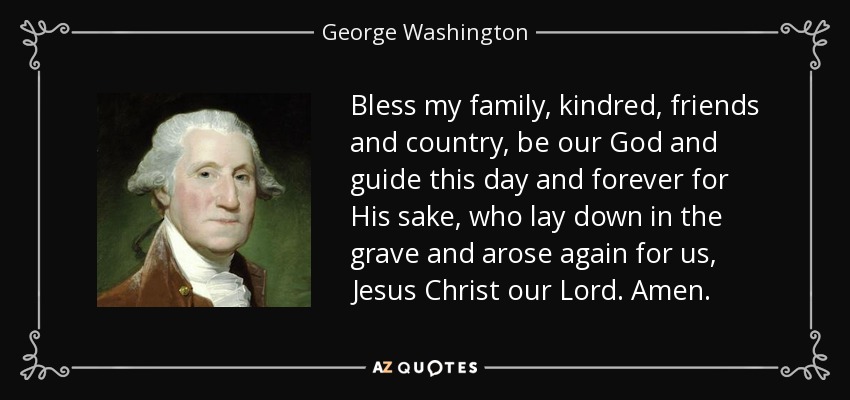
"There is not really any courage at all in attacking hoary or antiquated things, any more than in offering to fight one's grandmother. The really courageous man is he who defies tyrannies young as the morning and superstitions fresh as the first flowers."--G.K. Chesterton
"Hegseth gave the opening remarks.
“This is precisely where I need to be, and I think exactly where we need to be as a nation, at this moment,” Mr. Hegseth, standing at a lectern bearing the seal of the Defense Department, said in his opening remarks: “in prayer, on bended knee recognizing the providence of our lord and savior Jesus Christ.” He added, “Knowing that there’s an author in heaven overseeing all of this, who’s underwritten all of it, for us, on the cross, gives me the strength to proceed.”
Then he gave the opening prayer, which the New York Times printed in full so its readers could experience the horror of it all.
“King Jesus, we come humbly before you, seeking your face, seeking your grace, in humble obedience to your law and to your word,” Mr. Hegseth prayed after asking attendees to bow their heads. “We come as sinners saved only by that grace, seeking your providence in our lives and in our nation. Lord God, we ask for the wisdom to see what is right and in each and every day, in each and every circumstance, the courage to do what is right in obedience to your will. It is in the name of our lord and savior, Jesus Christ, that we pray. And all God’s people say amen.”
The story notes, "The assembled worshipers, including at least one general, repeated 'Amen.'"".......
Freedom! | Tim Sheets - YouTube--Powerful!

"We are eternally indebted to our Nation’s fallen heroes. On this solemn day, as we honor their sacrifice, the First Lady and I ask all citizens to join us in prayer that Almighty God may comfort those who mourn, grant protection to all who serve, and bring blessed peace to the world."--Prayer for Peace, Memorial Day, 2025 – The White House
"This weekend, we mark the anniversary of the first official observation of the holiday we now call Memorial Day, as established by General John A. Logan’s “General Order No. 11” of the Grand Army of the Republic dated May 5, 1868. This order reads in part: “The 30th day of May 1868 is designated for the purpose of strewing with flowers and otherwise decorating the graves of comrades who died in defense of their country during the late rebellion, and whose bodies lie in almost every city, village and hamlet churchyard in the land.” Logan’s order in fact ratified a practice that was already widespread, both in the North and the South, in the years immediately following the Civil War.... what the day was meant to observe: a solemn time, serving both as catharsis for those who fought and survived, and to ensure that those who follow will not forget the sacrifice of those who died that the American Republic and the principles that sustain it, might live. ...By all means, have a hot dog or a hamburger this weekend. If you’re close to a beach or a lake, take advantage of the nice weather and go. But on Memorial Day, take some time to remember the John Bobos and the Paul Ray Smiths who died to make your weekend possible.".......
Mark Steyn: The Loss of Proportion - Memorial Day, 2004
"Memorial Day in my corner of New Hampshire is always the same. A clutch of veterans from the Second World War to the Gulf march round the common, followed by the town band, and the scouts, and the fifth-graders. The band plays "Anchors Aweigh," "My Country, 'Tis of Thee," "God Bless America" and, in an alarming nod to modernity, Ray Stevens' "Everything Is Beautiful (In Its Own Way)" (Billboard No. 1, May 1970). One of the town's selectmen gives a short speech, so do a couple of representatives from state organizations, and then the fifth-graders recite the Gettsyburg Address and the Great War's great poetry. There's a brief prayer and a three-gun salute, exciting the dogs and babies. Wreaths are laid. And then the crowd wends slowly up the hill to the Legion hut for ice cream, and a few veterans wonder, as they always do, if anybody understands what they did, and why they did it.
Before the First World War, it was called Decoration Day - a day for going to the cemetery and "strewing with flowers or otherwise decorating the graves of comrades who died in defense of their country during the late rebellion." Some decorated the resting places of fallen family members; others adopted for a day the graves of those who died too young to leave any descendants.
I wish we still did that. Lincoln's "mystic chords of memory" are difficult to hear in the din of the modern world, and one of the best ways to do it is to stand before an old headstone, read the name, and wonder at the young life compressed into those brute dates: 1840-1862. 1843-1864.
In my local cemetery, there's a monument over three graves, forebears of my hardworking assistant, though I didn't know that the time I first came across them. Turner Grant, his cousin John Gilbert and his sister's fiance Charles Lovejoy had been friends since boyhood and all three enlisted on the same day. Charles died on March 5, 1863, Turner on March 6, and John on March 11. Nothing splendid or heroic. They were tentmates in Virginia, and there was an outbreak of measles in the camp.
For some reason, there was a bureaucratic mixup and the army neglected to inform the families. Then, on their final journey home, the bodies were taken off the train at the wrong town. It was a Saturday afternoon and the stationmaster didn't want the caskets sitting there all weekend. So a man who knew where the Grants lived offered to take them up to the next town and drop them off on Sunday morning.
When he arrived, the family was at church, so he unloaded the coffins from his buggy and left without a word or a note to anyone. Imagine coming home from Sunday worship and finding three caskets waiting on the porch. Imagine being young Caroline Grant, and those caskets contain the bodies of your brother, your cousin and the man to whom you're betrothed.
That's a hell of a story behind the bald dates on three tombstones.".......
 |
| The Journey Home |
 |
| "you guys are my world.” |
 |
| Meet Your Son |
 |
| One More Night |
Fallen U.S. Marine 2nd Lt. James Cathey and his wife Katherine with their unborn son.
Their story is told through Todd Heisler's 2017 Pulitzer photographs.

The Death of Captain Waskow: Wartime Columns: Ernie Pyle: Indiana University
"AT THE FRONT LINES IN ITALY, January 10, 1944 – In this war I have known a lot of officers who were loved and respected by the soldiers under them. But never have I crossed the trail of any man as beloved as Capt. Henry T. Waskow of Belton, Texas.
Capt. Waskow was a company commander in the 36th Division. He had led his company since long before it left the States. He was very young, only in his middle twenties, but he carried in him a sincerity and gentleness that made people want to be guided by him.
"After my own father, he came next," a sergeant told me.
"He always looked after us," a soldier said. "He’d go to bat for us every time."
"I’ve never knowed him to do anything unfair," another one said.
I was at the foot of the mule trail the night they brought Capt. Waskow’s body down. The moon was nearly full at the time, and you could see far up the trail, and even part way across the valley below. Soldiers made shadows in the moonlight as they walked.
Dead men had been coming down the mountain all evening, lashed onto the backs of mules. They came lying belly-down across the wooden pack-saddles, their heads hanging down on the left side of the mule, their stiffened legs sticking out awkwardly from the other side, bobbing up and down as the mule walked.
The Italian mule-skinners were afraid to walk beside dead men, so Americans had to lead the mules down that night. Even the Americans were reluctant to unlash and lift off the bodies at the bottom, so an officer had to do it himself, and ask others to help.
The first one came early in the morning. They slid him down from the mule and stood him on his feet for a moment, while they got a new grip. In the half light he might have been merely a sick man standing there, leaning on the others. Then they laid him on the ground in the shadow of the low stone wall alongside the road.
I don’t know who that first one was. You feel small in the presence of dead men, and ashamed at being alive, and you don’t ask silly questions.
We left him there beside the road, that first one, and we all went back into the cowshed and sat on water cans or lay on the straw, waiting for the next batch of mules.
Somebody said the dead soldier had been dead for four days, and then nobody said anything more about it. We talked soldier talk for an hour or more. The dead man lay all alone outside in the shadow of the low stone wall.
Then a soldier came into the cowshed and said there were some more bodies outside. We went out into the road. Four mules stood there, in the moonlight, in the road where the trail came down off the mountain. The soldiers who led them stood there waiting. "This one is Captain Waskow," one of them said quietly.
Two men unlashed his body from the mule and lifted it off and laid it in the shadow beside the low stone wall. Other men took the other bodies off. Finally there were five lying end to end in a long row, alongside the road. You don’t cover up dead men in the combat zone. They just lie there in the shadows until somebody else comes after them.
The unburdened mules moved off to their olive orchard. The men in the road seemed reluctant to leave. They stood around, and gradually one by one I could sense them moving close to Capt. Waskow’s body. Not so much to look, I think, as to say something in finality to him, and to themselves. I stood close by and I could hear.
One soldier came and looked down, and he said out loud, "God damn it." That’s all he said, and then he walked away. Another one came. He said, "God damn it to hell anyway." He looked down for a few last moments, and then he turned and left.
Another man came; I think he was an officer. It was hard to tell officers from men in the half light, for all were bearded and grimy dirty. The man looked down into the dead captain’s face, and then he spoke directly to him, as though he were alive. He said: "I’m sorry, old man."
Then a soldier came and stood beside the officer, and bent over, and he too spoke to his dead captain, not in a whisper but awfully tenderly, and he said:
"I sure am sorry, sir."
Then the first man squatted down, and he reached down and took the dead hand, and he sat there for a full five minutes, holding the dead hand in his own and looking intently into the dead face, and he never uttered a sound all the time he sat there.
And finally he put the hand down, and then reached up and gently straightened the points of the captain’s shirt collar, and then he sort of rearranged the tattered edges of his uniform around the wound. And then he got up and walked away down the road in the moonlight, all alone.
After that the rest of us went back into the cowshed, leaving the five dead men lying in a line, end to end, in the shadow of the low stone wall. We lay down on the straw in the cowshed, and pretty soon we were all asleep." .......
Dutch Sheets, Give Him 15--May 26, 2025:
"...A few years ago, I asked another hero and friend, retired Army Major William Ostan, to share a few thoughts with our Give Him 15 listeners regarding what Memorial Day means to him. Here is what Will sent back then. It is especially meaningful to me today as Will is fighting for his life from diseases acquired while serving in Afghanistan.
Will shares:
“There’s an old saying that bears witness to a day like today. ‘People sleep peaceably in their beds because rough men stand ready to do violence on their behalf.” On Memorial Day, we remember the ‘rough men and women’ of the U.S. Armed Forces who have sacrificed their lives so we can enjoy the blessings of liberty in peace.“Precious in the sight of the Lord is the death of his saints.” (Psalm 116:15)
As a combat veteran of two foreign wars (Iraq and Afghanistan), I tend to experience mixed emotions on Memorial Day that can sometimes vacillate wildly. One minute, I will be in deep anguish and sorrow while remembering my fallen comrades in arms. I mourn the loss of friendship with them, and think about their families left behind, the Gold Star spouses and children whose lives have been radically changed forever.
In the next minute, after the wave of grief has crested and fallen, I feel a sense of overwhelming pride. Pride that I was privileged to be friends with such great Americans. Pride in what we accomplished while at war. Pride that we kept the homeland safe while fighting over there. While seemingly paradoxical, it is good and right to experience both ends of the emotional spectrum when it comes to memories of the fallen.
In this vein, for the past few years, I’ve initiated and led a family tradition of reading the Gettysburg Address on Memorial Day. Sometimes we read it aloud at home in the late afternoon before enjoying the inevitable barbecue with friends. Other times we read it silently before laying a wreath at a Soldier’s grave in the early morning hours. I want my young daughters to know and understand the high price of freedom. I think oftentimes children grasp more than we adults realize.
Our civilization’s fragile flame of liberty is able to keep burning brightly because of such moments when generational transfer takes place.
Why the Gettysburg Address? Because I believe the words hold the import and portray the gravitas of what the military dead have given to us, the living, more than any others. Furthermore, President Abraham Lincoln’s speech is much more than a remembrance; as critically important as remembering is, it is ultimately a thunderous call to action.
Lincoln, the great orator and gifted wordsmith, crafted a masterful phrase to describe what the fallen have provided for those of us still enjoying life, liberty, and the pursuit of happiness. In his legendary Gettysburg Address, the penultimate words he scribed before closing the short, yet epic speech were, ‘we take increased devotion to that cause for which they gave the last full measure of devotion.’
He was speaking, of course, about the soldiers from both the North and the South who had been killed at Gettysburg. He describes their death as the ‘last full measure of devotion.’ Noah Webster’s 1828 Dictionary defines ‘devotion’ as ‘the state of being dedicated, consecrated, or solemnly set apart for a particular purpose.’ The military warriors Lincoln spoke of had done away with half-hearted measures and were ‘all in’ to complete the mission, even though it meant laying down their lives. They did their duty, and Lincoln now calls us to do ours through the following exhortation:‘It is for us the living, rather, to be dedicated here to the unfinished work which they who fought here have thus far so nobly advanced. It is rather for us to be here dedicated to the great task remaining before us…that we here highly resolve that these dead shall not have died in vain – that this nation, under God, shall have a new birth of freedom – and that government of the people, by the people, for the people, shall not perish from the earth.’So you see, my fellow Americans, Memorial Day is about much more than remembering the heroes of the past. It is also about us, their descendants, honoring our ancestors’ sacrifices by continuing the unfinished work they so nobly advanced. This is why we must, with all the fire of our faith, continue to pray for America to be turned back to God. Regardless of how bad circumstances may look, we must not falter, because duty is ours - results are God’s. A new birth of freedom is possible, if we don’t give up.” .......
Pray with me:
Heavenly Father, Your eyes have seen the sacrifice of every one of the fallen. Every man. Every woman. Every casualty of war. Every friend, every spouse, every parent, every child and family member, every comrade who has lost a loved one, both past and present– You’ve seen their tears and grieved alongside them all. Not one moment in battle has escaped Your attention. You are intimately aware of each dying breath and the measure of full devotion that was poured out through their ultimate sacrifice.
Father, we take a solemn moment now to join You in this. We honor the men and women who so selflessly gave their lives, and we honor those family members and loved ones who feel the loss most deeply. For those still mourning, would You wrap your arms of comfort around them and make Yourself known to them. For those who have been lost far in the past, help us never forget their sacrifice. For our own hearts, Lord, we ask that You impart to us a deep gratitude for the great cloud of witnesses who’ve paid such a price so that we can live in a land of liberty. Fan aflame the fires within us that we might continue to advance the unfinished work of our ancestors.
On this Memorial Day, we ask You, Lord, to remember the fallen and all that they so nobly fought for – we join our prayers with theirs and ask that You would bring a new birth of Freedom to the United States of America.In Jesus’ mighty name, Amen.
Our decree:
We decree that the lives of our American Servicemen and women were not sacrificed in vain. This nation, under God, shall have a new birth of freedom." .......
Yes and Amen to Your Kingdom Renaissance, Lord Jesus!

John 15
11-15 “I’ve told you these things for a purpose: that my joy might be your joy, and your joy wholly mature. This is my command: Love one another the way I loved you. This is the very best way to love. Put your life on the line for your friends. You are my friends when you do the things I command you. I’m no longer calling you servants because servants don’t understand what their master is thinking and planning. No, I’ve named you friends because I’ve let you in on everything I’ve heard from the Father.
16 “You didn’t choose me, remember; I chose you, and put you in the world to bear fruit, fruit that won’t spoil. As fruit bearers, whatever you ask the Father in relation to me, he gives you.
17 “But remember the root command: Love one another."

No comments:
Post a Comment